SaaS Competitive Radar — Issue #1: AI as pricing leverage, code review as territory
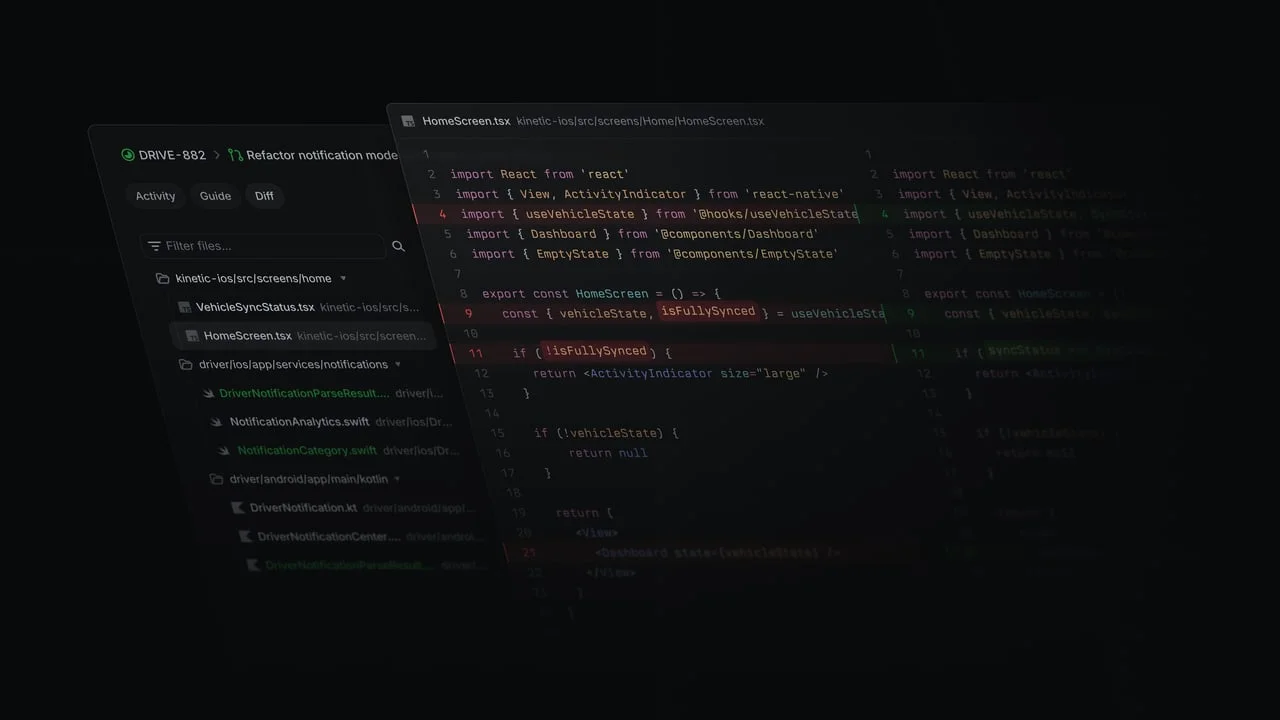
Slack, Notion, and Figma all used AI bundling to restructure pricing in the past year — each with a different method and target. Meanwhile, Linear shipped native code review and Code Intelligence, and Figma pushed deep into the coding agent space. This first issue maps who moved, by how much, and what it signals.

에디터 노트
The theme of the past several weeks across SaaS and productivity tools is hard to miss: companies that spent 2023–2024 racing to add AI features are now using AI as the structural rationale to raise prices. The playbook is consistent — bundle AI into a higher tier, deprecate the old standalone add-on, and call it expanded value. Slack, Notion, and Figma all ran versions of this move in the past year. The magnitude and method of each, however, tells a different story about each company's positioning and financial pressure.
Pricing moves
Slack — Business+ up 20%, AI bundled by default
In June 2025, Salesforce announced a restructuring of Slack's plans that took effect at first renewal after August 17, 2025. The Business+ plan rose from $12.50 to $15 per user per month (annual billing), a 20% increase. 1 The standalone Slack AI add-on was discontinued; customers who purchased it retained access until their first renewal, then automatically rolled into the new Business+ tier.
A new Enterprise+ plan was simultaneously introduced to bundle advanced AI, security, and Salesforce integration features at the top of the range. The 20% increase is nominally justified by the AI inclusion, but the practical effect is that existing Business+ customers who never wanted Slack AI now pay for it. 2
Magnitude: Significant — a forced-bundle price change affecting every Business+ customer at renewal, with no opt-out.
Signal: Salesforce is using Slack AI to justify price escalation across the entire base, not just new customers. This is a monetization push timed to Salesforce's broader enterprise AI narrative. Customers with Salesforce contracts should expect the same logic to apply to other products in the suite.
Notion — AI retired as add-on, forced into Business plan
Notion discontinued its $8–10/user/month standalone AI add-on in May 2025 and bundled full Notion AI into the Business plan at $20/user/month (annual). 3 Users on Free and Plus plans receive a limited number of complimentary AI responses; ongoing AI access now requires upgrading to Business.
The move also coincided with Notion reaching $500 million in ARR in 2025, giving the company financial headroom to be aggressive on pricing. 4 Enterprise customers have reported renewal quotes running 40% higher than prior-year contracts, per a Reddit thread with active Notion Enterprise admins. 5
Magnitude: Major — the Plus-to-Business gap ($10 → $20/seat) is a 2× jump for teams that want full AI access.
Signal: Notion is compressing its mid-tier, pushing teams toward Business to unlock the full product. The timing aligns with enterprise expansion — by folding AI into Business rather than pricing it separately, Notion makes per-seat negotiation simpler in large enterprise deals while extracting higher yield from SMB customers who previously used Plus.
Figma — AI credit enforcement began March 2026
Figma went public in July 2025 at $33/share. In late 2025, the company announced that AI credits per seat would begin enforcing limits from March 18, 2026 — completing the shift from a pure seat-based model to a seat + AI usage hybrid. 6
Professional plan admins can now purchase additional AI credits on a pay-as-you-go basis alongside their existing subscription — a June 3, 2026 release added this capability specifically for teams with variable AI usage. 7 This creates a metered revenue layer on top of the seat fee, similar to how cloud infrastructure companies sell reserved capacity alongside on-demand compute.
Magnitude: Moderate but structurally consequential — seats stay priced the same, but heavy AI users now face incremental charges.
Signal: Figma is chasing usage-based revenue to satisfy public-market growth expectations. The company reported Q2 2025 revenue of $249.6 million, up 41% year-over-year. 8 The enforcement of AI credit limits is its primary mechanism for sustaining that growth rate as new seat growth matures.
Feature releases
Linear — Diffs, Code Intelligence, and Team Docs
Linear shipped three substantial features in May–June 2026 that push the product firmly into software development infrastructure territory, moving beyond its issue-tracking roots.
Linear Diffs (launched May 28, 2026) is a native code review surface embedded directly in Linear. Engineers can review diffs from any issue with a pull request, iterate on code with AI agents in the diff surface, and ship from within Linear — all syncing back to GitHub. 9 Guided reviews (in beta, free during beta for Business and Enterprise plans) surface the core of a change first, with AI-generated explanations per section.
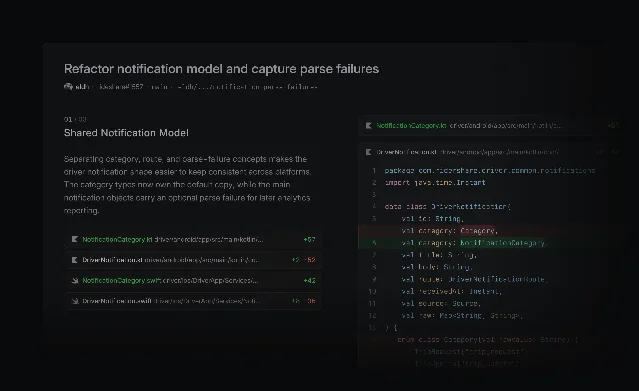
Code Intelligence (launched May 14, 2026, public beta on Business and Enterprise) gives Linear Agent read access to connected GitHub repositories, letting PMs, support, and engineers query how a feature is implemented, trace regressions, and write sharper specs — without pulling in an engineer for every context question. 10
Team Documents (launched June 4, 2026) gives every team in Linear a dedicated home page for notes, shared references, and persistent context that doesn't belong inside a specific issue. 11
Magnitude: Major — Diffs and Code Intelligence represent Linear expanding its surface area into territory currently owned by GitHub, GitLab, and specialized code review tools.
Signal: Linear is positioning itself as the connective layer between product planning and code delivery. By pulling code review into the same workspace as issues, it reduces the number of context switches for engineers and creates lock-in around the full development lifecycle, not just task tracking.
Figma — Agent, Make (local code), and Check Designs
Figma's June 2026 release cadence shows the company deploying AI across every layer of the design-to-code pipeline.
Figma Agent (beta, launched May 20, 2026) is an in-product AI agent that generates and remixes designs natively, automated repetitive work, and adapts to your design system. Available on Professional, Organization, and Enterprise plans; free during beta, AI credits apply at general availability. 7
Figma Make with local code (closed beta, launched May 28, 2026) connects Make to a local code repository. Designers and agents can target specific UI elements, describe changes in natural language, and the agent writes and commits code — including creating pull requests directly from Make. 7

Check Designs (launched June 4, 2026, Organization and Enterprise only) scans design files against the design system and flags hard-coded values, color contrast violations, library mismatches, and detached components. 7
Magnitude: Major — Make with local code in particular is a direct play into the IDE/coding agent space, which puts Figma in competition with Cursor, Copilot, and Windsurf on the implementation side.
Signal: Every one of these features strengthens Figma's case that it owns the full design-to-ship pipeline. The more engineers rely on Figma's code agent, the harder it becomes to justify using a separate planning tool, code agent, or design-system linter.
Notion — Developer Platform (Workers, External Agents)
On May 13, 2026, Notion launched a developer platform that lets teams run custom code inside Notion's hosted sandbox (Workers), bring any data source into the workspace via API sync, and register third-party AI agents as first-class workspace participants. 12
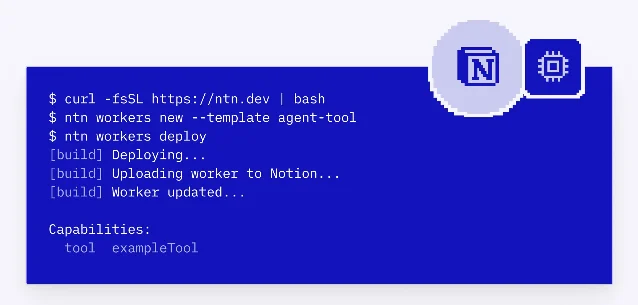
ntn CLI — the unified developer entry point for Workers and External Agents 12Workers are available in public beta on Business and Enterprise plans, free until August 2026. External Agents are in private beta. Supported agent partners at launch include Claude Code, Cursor, Codex, and Decagon.
Magnitude: Significant — this moves Notion from a document workspace into a platform that can be programmatically extended and into which AI agents can be embedded as ongoing collaborators.
Signal: Notion is competing with Atlassian's platform ecosystem and with workflow automation tools like Zapier and Make. By offering hosted code execution, Notion can capture integration revenue and extend enterprise stickiness far beyond simple document storage. This is Notion's answer to the question: once AI can write the docs, what do you sell?
Competitive positioning snapshot
| Company | Move | Tier affected | Change type |
|---|---|---|---|
| Slack | Business+ price +20%, AI bundled, Enterprise+ added | Business+ and above | Pricing restructure |
| Notion | AI add-on retired, bundled into Business plan | Plus → Business upgrade pressure | Pricing restructure |
| Figma | AI credit enforcement + pay-as-you-go credits for Pro | All paid plans | Usage monetization |
| Linear | Diffs, Code Intelligence, Team Docs (Business/Enterprise) | Business and Enterprise | Feature expansion |
| Figma | Agent, Make with local code, Check Designs (various tiers) | Professional and above | Feature expansion |
| Notion | Developer Platform: Workers + External Agents | Business and Enterprise | Platform expansion |
The read across products
Three trends are simultaneously active:
AI is now the pricing excuse. Slack, Notion, and Figma all ran some variant of "we're including AI, so prices are going up or tiers are collapsing." None of these are genuinely new features bundled for free — they are capabilities that were previously optional becoming mandatory pricing components. Buyers should expect the same playbook at renewal from any SaaS vendor currently investing in AI features.
The fight for the development lifecycle. Linear building code review into the same surface as issue tracking, and Figma building a code agent into the same surface as design, are two different bets on the same thesis: that whoever owns the artifact that engineers work from every day will capture adjacent workflow steps. GitHub is the obvious incumbent to watch as these features mature.
Platform over product. Notion's developer platform and Figma's Agent beta both represent a deliberate shift from "we are a tool" to "we are infrastructure other agents and tools run on." This changes the competitive calculus — it is harder to rip out a platform than a SaaS product, and it creates revenue models (API calls, agent credits, developer ecosystem fees) that pure seat-based tools can't access.
Watch for: ClickUp and Asana's response to Linear's code intelligence play. Neither currently has a code review native surface, and Linear's move could pressure both to either partner with GitHub more tightly or acquire a code review capability.
참고 출처
- 1Updates to feature availability and pricing for Slack plans
- 2Slack just raised prices 125% by forcing AI bundles into existing plans
- 3Notion Pricing 2026: Plans, Costs & Real Costs
- 4Notion – CNBC Disruptor 50
- 5Anyone with Notion Enterprise been hit with a 40% price hike
- 6Figma Trades in Reset Mode as the Market Reprices Growth After the IPO Hangover
- 7Figma product news and release notes
- 8Figma Announces Second Quarter 2025 Financial Results
- 9Linear Diffs changelog
- 10Code Intelligence changelog
- 11Team documents changelog
- 12Introducing Notion's Developer Platform
이 콘텐츠를 둘러싼 관점이나 맥락을 계속 보강해 보세요.